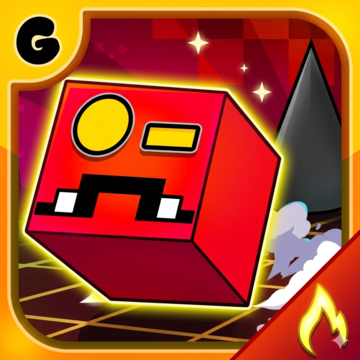
Geometry Dash Deadlocked
 Subway Surfers
 Ball Surfer 3D
 Run 3
 Swagflip
 Victory Lap Dash
 I Just Might Dash
 Geometry Arrow
 Geometry Dash Wave
 Geometry Dash Press Start
 Geometry Dash Lite
 Geometry Dash Tidal Wave
 Geometry Dash Spam
 Geometry Dash Nine Circles
 Geometry Dash Demons
 Geometry Dash Suponho
How to Play Geometry Dash Deadlocked
- Click the left mouse button on PC or tap the screen on mobile devices to jump, fly, or control your character depending on the current game mode.
- Press Z to place a checkpoint.
- Press X to remove the most recently placed checkpoint.
A Harder Experience Than Classic Geometry Dash Levels
Geometry Dash Deadlocked is widely recognized as being significantly more difficult than early Geometry Dash levels such as Stereo Madness, Back on Track, or Polargeist.
Faster Gameplay
One of the first things players notice is the increased speed.
The level rarely gives you time to relax. Obstacles appear rapidly, and many jumps require split-second decisions. Even players who comfortably complete classic Geometry Dash levels often need time to adjust to Deadlocked's faster pace.
The higher speed also makes memorization more important because reacting at the last moment is often impossible.
More Complex Obstacles
Classic Geometry Dash levels generally focus on teaching one mechanic at a time.
Geometry Dash Deadlocked frequently combines several mechanics into the same sequence. You may need to fly through narrow Wave corridors, immediately transition into a Ship section, then control a Robot or Ball only seconds later.
This constant variety keeps the gameplay exciting but also demands much greater concentration.
Tighter Wave Sections
The Wave segments are among the most challenging parts of Geometry Dash Deadlocked.
Many corridors leave almost no room for error, forcing players to make extremely precise movements. Small adjustments are much safer than large corrections, especially during high-speed zigzag passages.
Developing strong Wave control before attempting long runs can save a considerable amount of practice time.
More Demanding Timing
Jump timing becomes increasingly strict throughout the level.
Some obstacles require immediate inputs after exiting a portal, while others expect delayed jumps that can easily catch new players off guard.
Instead of relying purely on visual reactions, experienced players often synchronize their inputs with the background music to maintain consistency.
This Fan-Made Version Offers a Serious Challenge
Geometry Dash Deadlocked is based on one of the most famous difficult levels in the Geometry Dash community. Even as a fan-made browser version, it successfully captures the demanding gameplay that has made Deadlocked so popular.
Designed for Experienced Players
Unlike beginner-friendly Geometry Dash games like Geometry Dash Wave Challenge, this version assumes players already understand the series' basic mechanics.
Portal transitions happen frequently, obstacle spacing is tighter, and there are very few opportunities to recover from mistakes.
Players who have completed easier levels will find this version much more rewarding because it fully tests the skills developed in previous games.
Every Section Requires Focus
One reason Geometry Dash Deadlocked feels so satisfying is that nearly every section introduces a different challenge.
Instead of repeating the same obstacle patterns, the level constantly changes movement styles, speeds, and layouts. This prevents gameplay from becoming repetitive while encouraging players to improve multiple skills at once.
Progress Comes Through Repetition
Completing Geometry Dash Deadlocked rarely happens by luck.
Most successful players gradually memorize difficult sections through repeated practice. Every failed attempt teaches something new, whether it is better jump timing, a safer flying angle, or a more consistent rhythm.
Over time, these small improvements combine into a complete successful run.
What Do You Need to Beat Geometry Dash Deadlocked?
Geometry Dash Deadlocked rewards preparation just as much as fast reflexes. Having the right skills and playing setup can noticeably improve your performance.
Precise Character Control
Learning to make controlled jumps instead of unnecessary extra clicks reduces mistakes throughout the level. This is especially important during Ship and Wave sections, where small adjustments produce much smoother movement.
Consistency is usually more valuable than aggressive reactions.
Fast Reflexes
Although memorization plays a major role, quick reactions are still essential.
Unexpected portal transitions, changing gravity, and fast obstacle sequences require players to process information almost instantly.
As you become more familiar with the level, your reaction speed naturally improves because many movements become automatic.
A Stable Internet Connection
Since this fan-made version runs in a web browser, a stable internet connection helps maintain smooth gameplay.
Connection interruptions or loading delays can negatively affect timing during fast sections, making precise movements much harder.
A Responsive Screen or Mouse
A responsive mouse on PC or a touchscreen with low input delay on mobile devices allows your actions to register immediately. Because many jumps require frame-perfect timing, reliable hardware can make the experience feel much smoother.
Using a larger display can also help you read upcoming obstacles earlier, giving you slightly more time to prepare your next movement.