
Geometry Dash Wave
 Subway Surfers
 Ball Surfer 3D
 Run 3
 Swagflip
 Victory Lap Dash
 I Just Might Dash
 Geometry Arrow
 Geometry Dash Press Start
 Geometry Dash Lite
 Geometry Dash Tidal Wave
 Geometry Dash Spam
 Geometry Dash Nine Circles
 Geometry Dash Demons
 Geometry Dash Suponho
Concept and Inspiration
A line of light can tell a surprisingly detailed story. An oscilloscope plots a changing electrical voltage against time, turning rises, falls, and repeated pulses into a shape you can read. Engineers use those traces to examine details such as a signal's amplitude, frequency, and timing. [1] A sharp bend in a line can therefore mean something quite different from a smooth wave: the path itself carries the information.
In a traditional cathode-ray tube, an electron beam is directed toward a phosphorescent screen, which lights up where the beam strikes. Steering systems move that beam, and cathode-ray tubes have been used to display oscilloscope waveforms. [2] That is the fascinating part of the image: you are looking at the visible result of controlled movement, even though the beam itself is hidden inside the instrument.
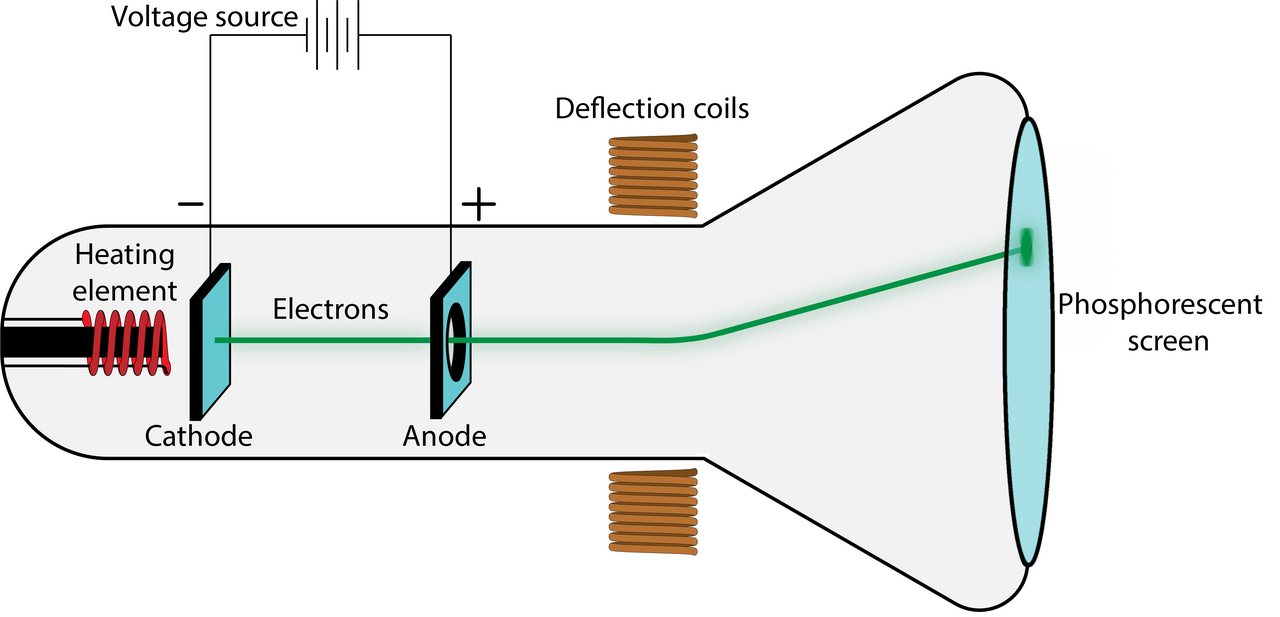
Figure 1. A simplified cathode-ray tube diagram shows an electron beam directed toward a phosphorescent screen.
Photo: Jordan Sawchuk | ccby-sa4.0
Early vector displays took a related approach to drawing. Instead of filling a rectangular grid of pixels line by line, a vector monitor could guide its beam along the lines of a picture. [3] The underlying visual language is simple: vector graphics describe forms through points, lines, curves, and polygons. [4] A few connected segments can suggest movement, direction, or even a whole landscape without much ornament.
There is an artistic side to that idea, too. A long-exposure photograph can preserve the wandering path of a moving light as loops and crossings. The light painting shown here is an artwork, not a recording from an oscilloscope; it offers a visual analogy for why a bright trail against darkness is so easy to follow. On some vector monitors, a freshly drawn trace had to be refreshed repeatedly as its phosphor glow faded. [3] Whether in an instrument or an illustration, a line becomes compelling when its direction changes before your eyes.
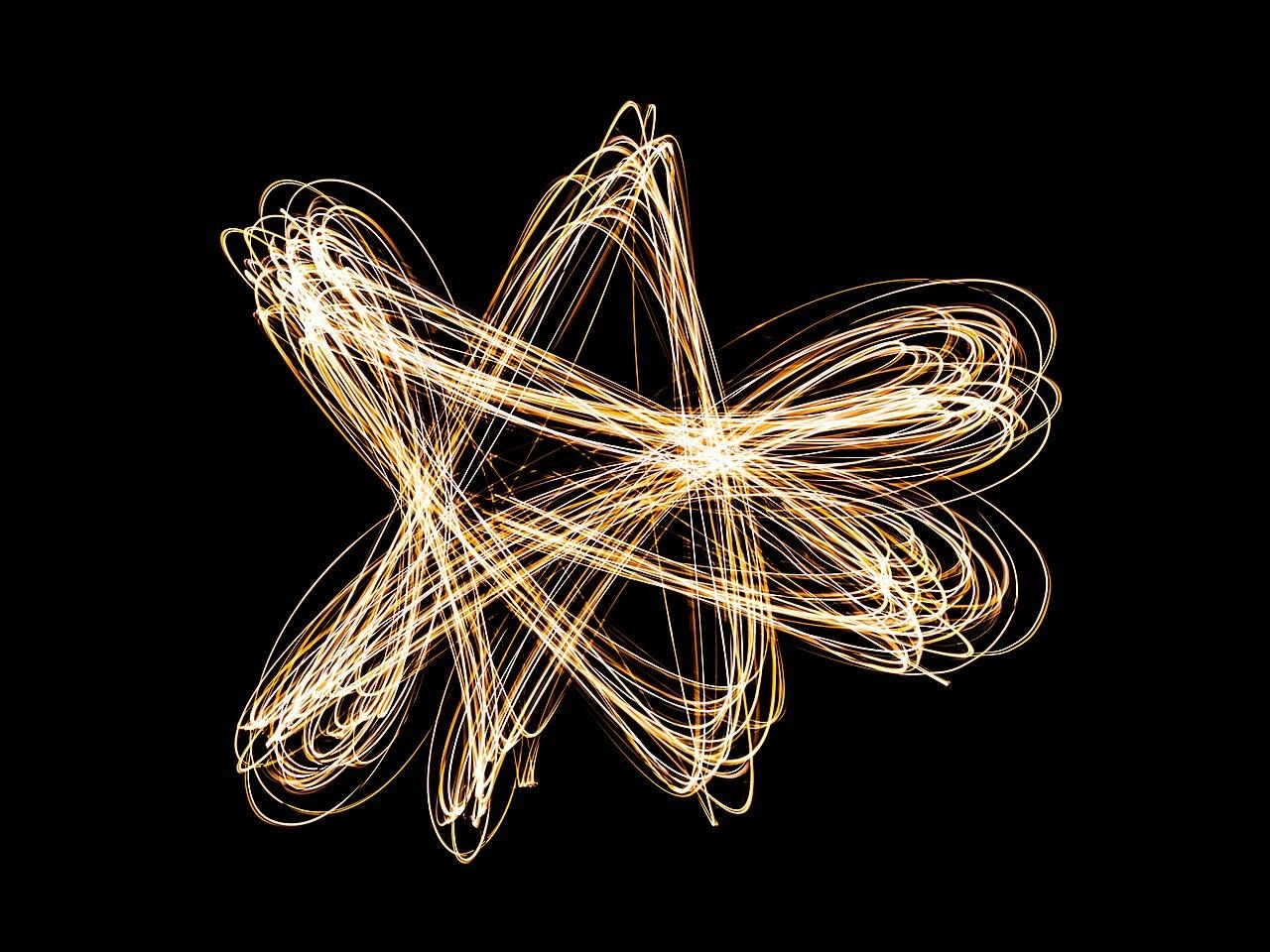
Figure 2. Looping light trails in a long-exposure artwork illustrate how a moving point can leave a striking visible path.
Photo: Dietmar Rabich | ccby-sa4.0
We developed Geometry Dash Wave at Wavechallenge around a playful version of that visual idea: a tiny luminous pointer finding a route through a world of sharp, signal-like shapes. Its white zigzag trail makes every rise and drop visible, while bright backgrounds and dark polygonal barriers turn the course into a living diagram. We chose that contrast so you can follow the pointer's path and read the next gap in the same glance.
Story
Imagine a city whose lights are kept alive by an enormous Signal Archive. Every streetlamp, window, and tower depends on the last clean pulse passing through its heart. Then the Archive begins to dim. Its once-open channels buckle into jagged passages, and familiar pathways become a maze of teeth and narrow openings.
Iona, a young keeper of the Archive, watches a white spark flicker on the control glass. It is too small to break through a wall and too fragile to survive the sharp edges, but it can change course in an instant. She gives the spark a simple mission: climb when the passage opens above, dive when danger gathers near the ceiling, and keep moving toward the green receiving gate. Each turn draws another bright segment across the darkened map.
The channels grow tighter as the pulse travels. Massive triangular ridges loom like frozen mountain ranges; rows of points crowd the margins; small shapes glow behind the barriers like memories trapped in the circuitry. Iona cannot smooth the route or move its walls. She can only keep the signal alive through one precise change of direction after another. When the spark finally enters the receiving gate, another stretch of the city wakes up, one line of light at a time.
Gameplay
Your goal in Geometry Dash Wave is to guide a small triangular pointer through each moving obstacle course and into the green oval finish portal. The pointer travels diagonally upward while you hold the movement input and diagonally downward when you release it, leaving a bright zigzag behind. Keep switching direction to pass through open gaps. Touch a hazardous spike, pointed barrier, or dangerous course edge and the attempt ends; your next attempt starts at the beginning of that level.
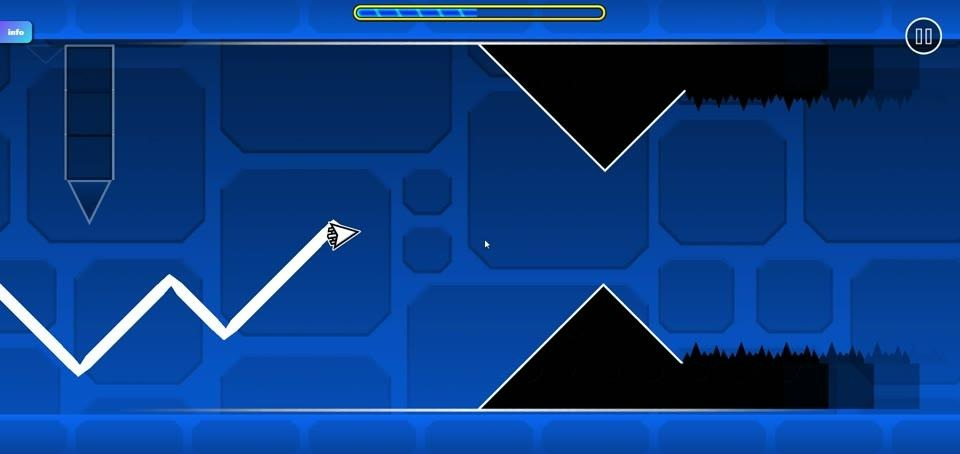
Figure 3. A glowing zigzag threads between dark ceiling and floor wedges in a blue corridor.
Your Triangle and the Trail
You control a tiny white-outlined triangle with a darker center. The course advances around it, and the angular white line behind it records the turns you have made. Think of the pointer as the leading tip of a glowing pencil: the line follows your decisions, but only the current route through the next opening keeps the attempt alive.
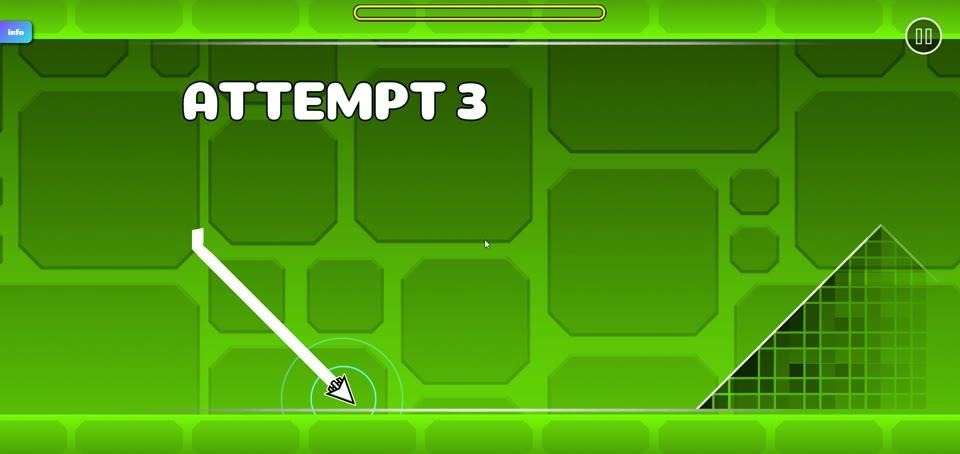
Figure 4. The small triangular pointer and its white trail pass a large gridded ramp beneath the progress display.
For a typical passage, rise above a row of floor spikes, dip beneath the next ceiling wedge, then climb again when the center of the corridor opens. Your challenge is to change direction early enough to fit the triangle through each gap. The trail helps you see the rhythm of your movements, but the next obstacle determines what to do now.
Barriers, Spikes, and Course Landmarks
The course mixes broad triangular mounds filled with grid lines, black wedges that squeeze the space between ceiling and floor, and densely packed serrated border strips. Some stretches add outlined rows of spikes against a gridded background or boxed pairs of sharp points. These solid hazards force you to find the open channel instead of trying to pass through a wall. Certain surfaces of solid blocks can be traveled along safely, so read the actual pointed edges and hazardous boundaries rather than treating every flat face as a spike.
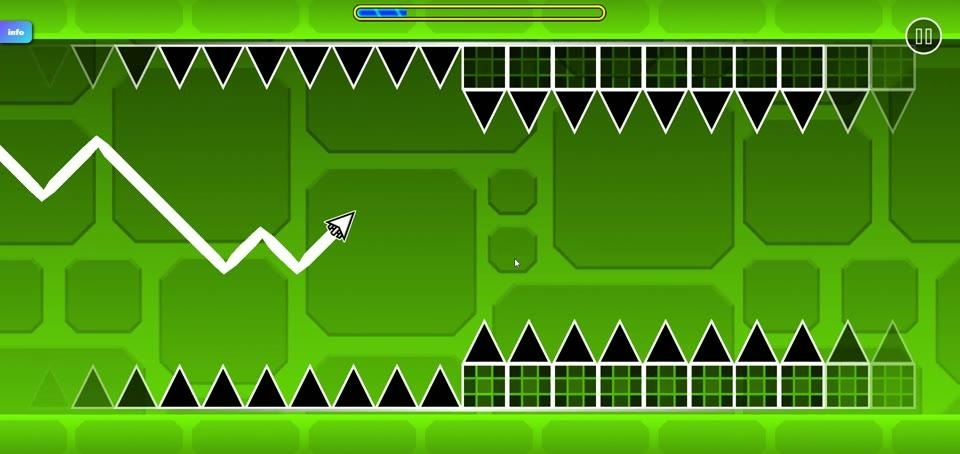
Figure 5. Repeated outlined spikes press inward from the ceiling and floor around a narrow safe route.
Tall, narrow pointed towers and hanging pointed blocks make some openings especially tight. Other sections bring in stationary orange-red, flame-like edge hazards. Their job is the same as the other dangerous boundaries: leave enough room for your triangular pointer to slip through without contact. A stationary toothed wheel also occupies part of the passage. Keep your triangle clear of its teeth as you steer between the surrounding obstacles.
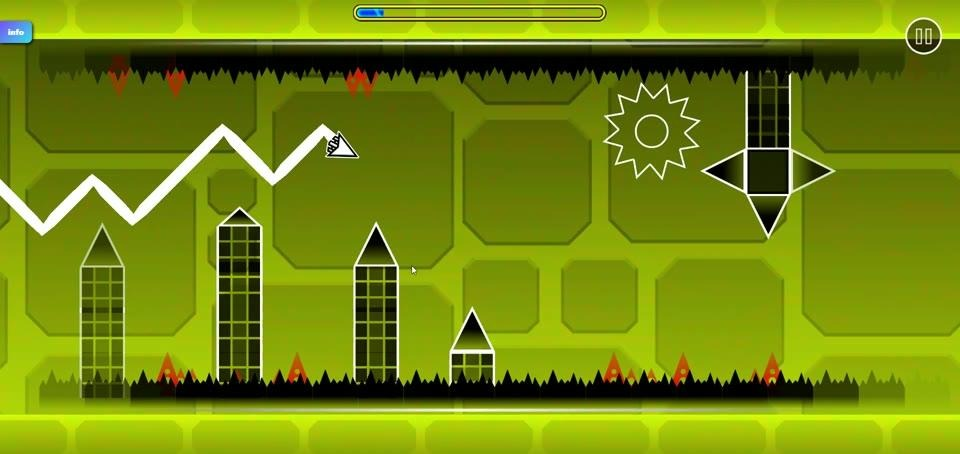
Figure 6. Pointed columns, a hanging block, and a pale toothed circle crowd a warm-colored passage.
Not every striking shape is something to collect or avoid. Yellow pixel-style smiling faces inside some gridded triangles and overlapping translucent diamonds are decorative elements. They give the courses personality without changing the goal: keep your moving triangle clear of the hazards and head for the exit.
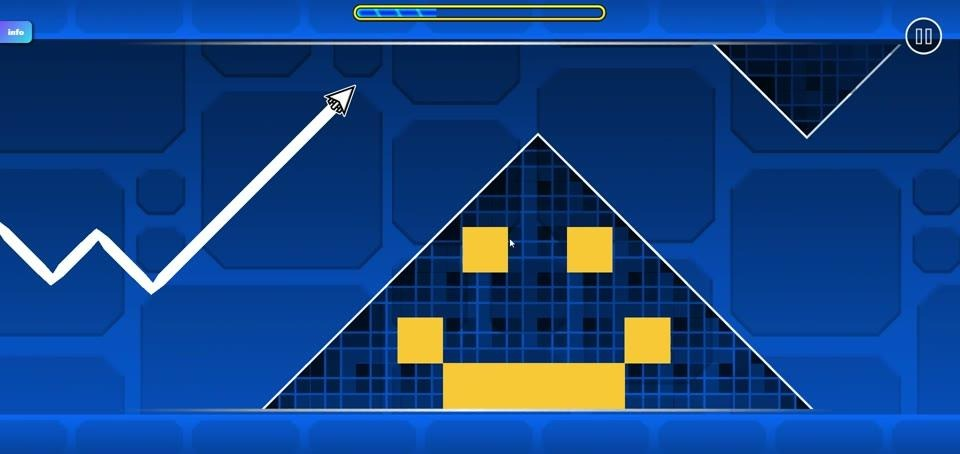
Figure 7. A yellow pixel-style smiling face decorates a large gridded triangle beside the glowing route.
Completion, Rewards, and Retries
This is a level-based challenge, so winning means reaching the green oval portal at the end of the current course. Crossing it opens the LEVEL COMPLETE results screen and unlocks the next level. In Normal mode, reaching the finish without dying during that attempt also earns stars. Progress comes from clearing courses; there is no separate running point score or high-score leaderboard to chase.
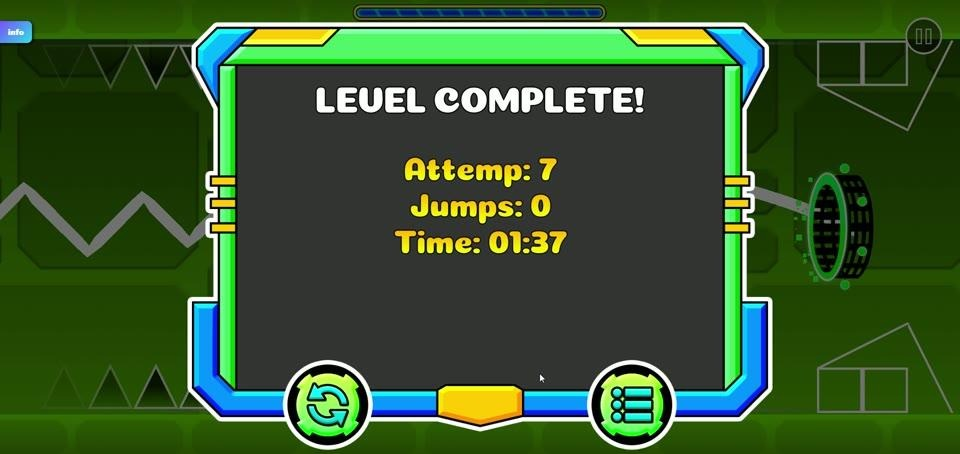
Figure 8. The Level Complete panel confirms a successful finish and displays replay and main-menu buttons below.
A collision with a hazardous obstacle ends the current attempt before the portal. When you retry, you begin that level again from its starting point and must navigate its passages anew. Clearing one difficult gap is useful progress within an attempt, but it does not count as finishing the level. Each restart gives you another chance to carry a clean route all the way to the gate.
Reading the Interface
The segmented cyan bar at the top shows your progress through the current level and fills when you complete it. The circular button with two vertical bars in the upper-right corner pauses the game. After you reach the green finish portal, the Level Complete screen confirms your success and shows the time taken for the successful attempt. Select the circular-arrow button to replay the level from the beginning, or the stacked-lines button to return to the main menu.
Visual Style
Geometry Dash Wave uses bold neon greens, electric blues, magentas, and hot oranges to set the mood of each passage. The small white triangle stays easy to spot against those saturated backgrounds. Its crisp zigzag trail gives the movement a visual signature, while black silhouettes and fine grid patterns separate dangerous shapes from open space.
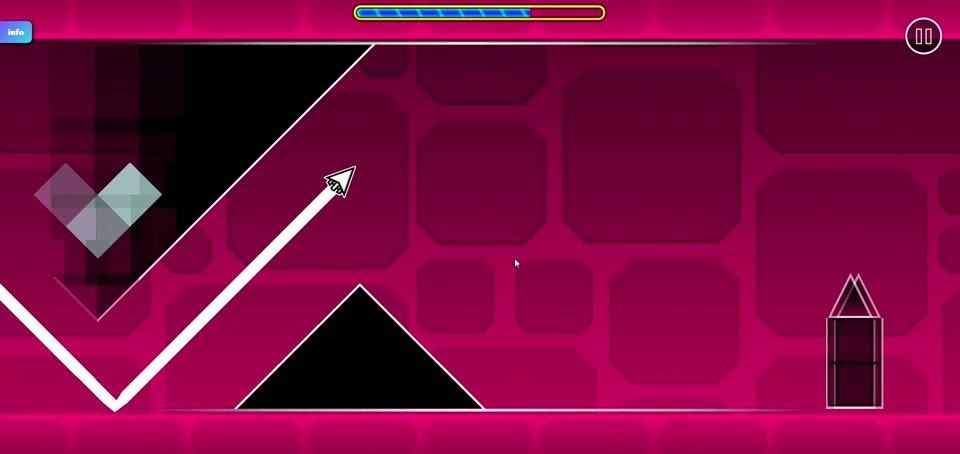
Figure 9. A magenta course pairs a tall pointed tower with faint overlapping diamond decorations.
We chose large geometric forms for clarity at speed: long triangular slopes establish a direction, serrated borders warn you away from the margins, and tightly spaced points make narrow openings instantly recognizable. Small visual jokes, including the pixelated smile tucked into a triangle, add character without interrupting the readable outline of the route. The world feels like an illuminated signal drawing that has suddenly become a place you must navigate.
Standout Features
The defining challenge is continuous diagonal flight through tight, differently shaped gaps. Because the pointer changes between climbing and descending, even a short stretch asks you to judge the space above and below it. Large gridded ramps call for broad changes in height; repeated spikes call for smaller, carefully timed corrections. The persistent white trail lets you see the path your choices created.
That movement gives Geometry Dash Wave a distinct feel beside other simple-input obstacle games. In The Impossible Game, for example, the documented challenge is to guide a cube past spikes and pits with a one-button jumping action. [5] Here, the triangle follows an up-or-down diagonal route through corridors, so the immediate puzzle is choosing which side of the passage needs space next. Both reward close attention to hazards, but their moment-to-moment movement is different.
Short attempts, an easy-to-read progress bar, and a clear level-completion goal make it natural to learn a difficult passage one turn at a time. When you are ready to draw your own route through the lights, play Geometry Dash Wave on Wavechallenge and aim for the next green gate.
Controls
PC
1. In the level, find the small white-outlined triangle. Hold the left mouse button or Space to move it diagonally upward.
2. Release the mouse button or Space to move diagonally downward. Alternate holding and releasing to pass through the gaps without touching dangerous edges.
Mobile
1. Find the white-outlined triangle in the level. Touch and hold the screen to send it diagonally upward.
2. Lift your finger to send the triangle diagonally downward. Repeat the touch-and-release rhythm to steer through each opening.
References
[1] Oscilloscope. https://en.wikipedia.org/wiki/Oscilloscope
[2] Cathode ray tube. https://en.wikipedia.org/wiki/Cathode_ray_tube
[3] Vector monitor. https://en.wikipedia.org/wiki/Vector_monitor
[4] Vector graphics. https://en.wikipedia.org/wiki/Vector_graphics
[5] The Impossible Game. https://en.wikipedia.org/wiki/The_Impossible_Game
Image Credits
Cathode Ray Tube Diagram.png — Jordan Sawchuk — ccby-sa4.0. https://commons.wikimedia.org/wiki/File:Cathode_Ray_Tube_Diagram.png License: https://creativecommons.org/licenses/by-sa/4.0
Lissajous-Figur -- 2020 -- 7766.jpg — Dietmar Rabich — ccby-sa4.0. https://commons.wikimedia.org/wiki/File:Lissajous-Figur_--_2020_--_7766.jpg License: https://creativecommons.org/licenses/by-sa/4.0