Geometry Dash Lite
 Subway Surfers
 Ball Surfer 3D
 Run 3
 Swagflip
 Victory Lap Dash
 I Just Might Dash
 Geometry Arrow
 Geometry Dash Wave
 Geometry Dash Press Start
 Geometry Dash Tidal Wave
 Geometry Dash Spam
 Geometry Dash Nine Circles
 Geometry Dash Demons
 Geometry Dash Suponho
Concept and Inspiration
A leap lasts only an instant, yet it contains a whole sequence of changing positions. In the nineteenth century, chronophotography gave people a way to examine those moments. Instead of treating a stride or a jump as one blur, photographers recorded successive phases of movement. The resulting pictures helped researchers study how bodies travel through space and gave artists new references for drawing motion. [1]
Eadweard Muybridge approached the problem with multiple cameras, capturing different positions within an animal’s stride. His studies could reveal moments that ordinary observation missed. He later used a zoopraxiscope to project painted moving images from glass discs, bringing the separate positions back into the flow of apparent movement. [2]
French scientist Étienne-Jules Marey examined motion from another angle. Alongside his photographic studies, he developed graphical ways to display and interpret measurements of the body. A walking figure recorded in successive positions makes a simple act feel almost architectural: each change of posture has its own place. [3]
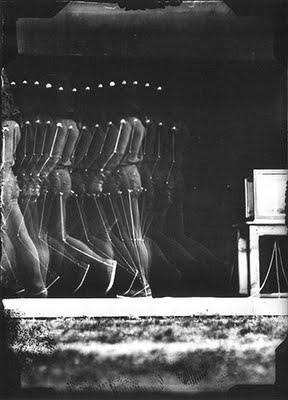
Figure 1. Successive positions of a walking man captured in a historical motion study.
Photo: Étienne-Jules Marey | publicdomain
Marey’s chronophotographic gun, invented in 1882, could capture twelve images per second on a single plate. A historical photograph shows him with this unusual camera, a reminder that the study of motion once required inventive physical instruments. [4]
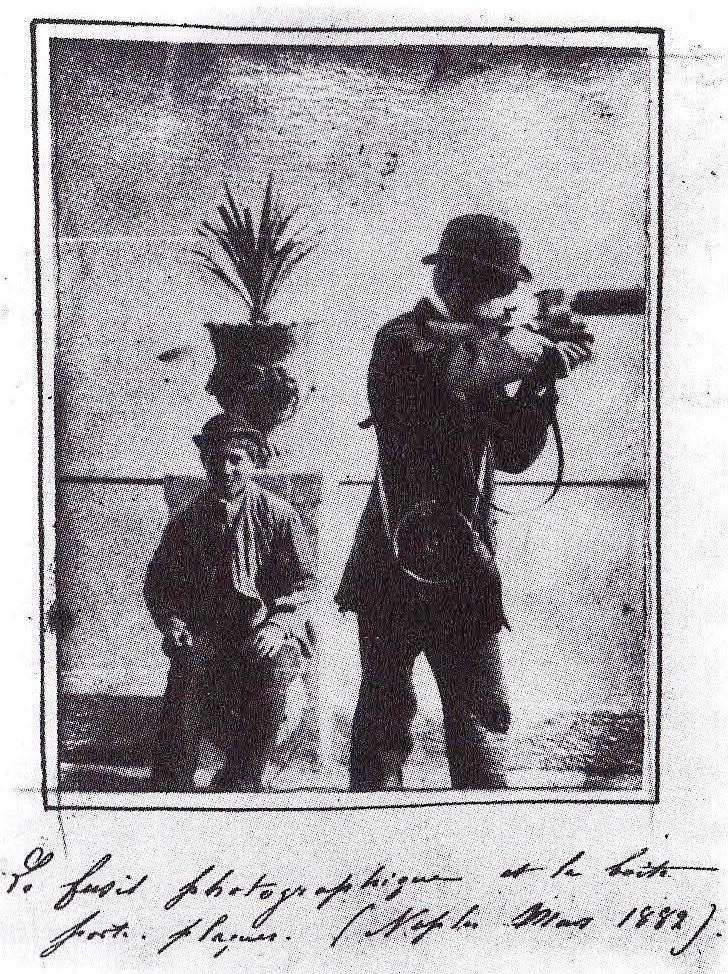
Figure 2. Étienne-Jules Marey with his gun-shaped photographic camera in Naples.
Photo: Unknown author Unknown author | publicdomain
The idea soon reached beyond the laboratory. One scholarly study connects recorded movement to dance notation arranged like a musical score; another traces exchanges between motion science and experimental art, including work associated with Marcel Duchamp and Italian photodynamism. Seeing movement in stages became a way to think creatively about time itself. [5] [6]
We developed Geometry Dash Lite for Wavechallenge around a playful version of that fascination with the next instant. Our lime-green cube changes angle during a jump; later, a tiny ship traces a rising or falling route through a narrow passage. We chose clear outlines and sharp changes in height so you can read each moment quickly. Here, the difference between a safe path and a collision can be a single well-timed action.
Story
Imagine Stillwater, a city where the enormous clock above the rooftops has stopped between two ticks. Its last second has shattered into hundreds of glowing pictures: a market awning hangs motionless in the wind, rain floats beside the windows, and a bell waits forever at the top of its swing. Neri, an apprentice clock keeper, discovers one thing still moving—a small green spark that can slip between the frozen moments.
Neri sends the spark along the clock’s broken pathways. At first it travels as a little square, springing over jagged shadows and finding narrow ledges where another fragment of time might be waiting. Farther on, the passage rises into a crimson chamber too cramped for ordinary steps. The spark folds into a pointed ship and must thread between teeth above and below. Each stretch is a tiny argument with the clock: move too late and the moment is gone.
Whenever the spark falls, Neri is brought back to the first image. Yet a luminous mark shows the farthest point reached, proof that the next attempt can go farther. At the final bell, Neri faces a choice: preserve the single perfect instant when the city stood still, or let time move again, taking all its surprises with it. Our imagined journey gives the quick jumps and close calls a larger heartbeat—the courage to keep moving even when you cannot hold on to a moment.
Gameplay
Your goal is to reach the end of each side-scrolling level. You control a bright green cube, timing jumps to clear deadly spikes and columns and land on solid surfaces. Passing through a Ship Portal changes the cube into a small flying ship, and you guide its height between hazards. The progress bar moves toward 100%; reaching that mark completes the level and unlocks the next one. A collision with a deadly obstacle ends the attempt, so you begin that level again from the start.
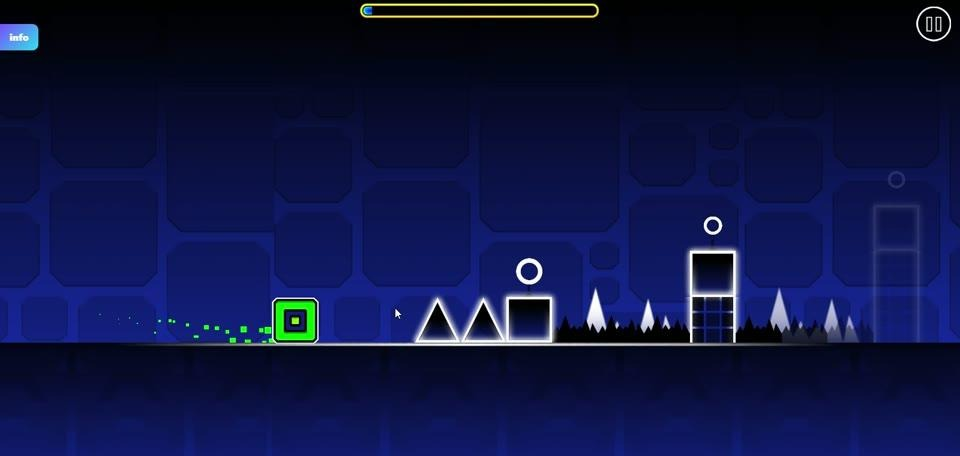
Figure 3. The green cube moves toward pointed spikes and tall outlined columns along the track.
The Cube and Its Route
The cube is a lime-green square with a dark center and a bright border. It travels along a flat, dark track and tilts as it jumps. Large white-edged triangular spikes and dense bands of smaller ground teeth both end an attempt on contact. Tall black columns with white outlines are dangerous if you run into them, but you can land on their tops when your jump clears the side.
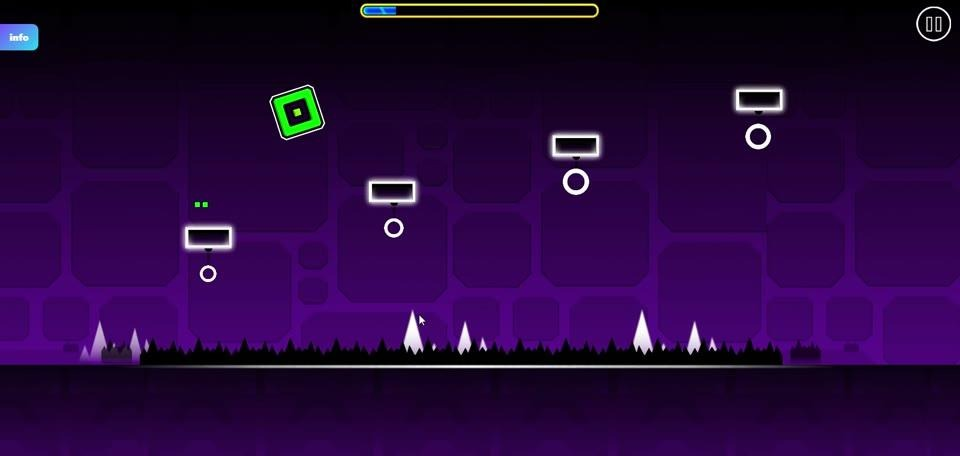
Figure 4. A rotating green cube approaches narrow ledges suspended above a bed of spikes.
Short floating platforms give you solid places to land above the spikes. They do not bounce the cube upward, break, or vanish. Separate rectangular stepping blocks are solid landing spots too. You can clear a row of spikes, land on a narrow ledge, then time another jump to reach the next safe top.
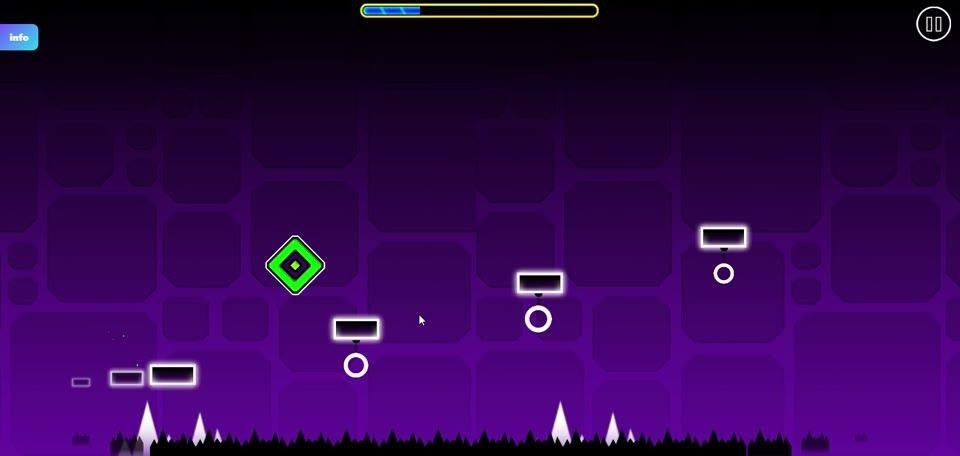
Figure 5. Short white-bordered platforms and separate steps form a route over sharp ground hazards.
Some sections change elevation more dramatically. A broad raised platform has a purple grid-patterned face and a bright top edge, with a spike waiting on the higher route. Reaching the platform is only part of the job; you still need to watch what sits on top of it.
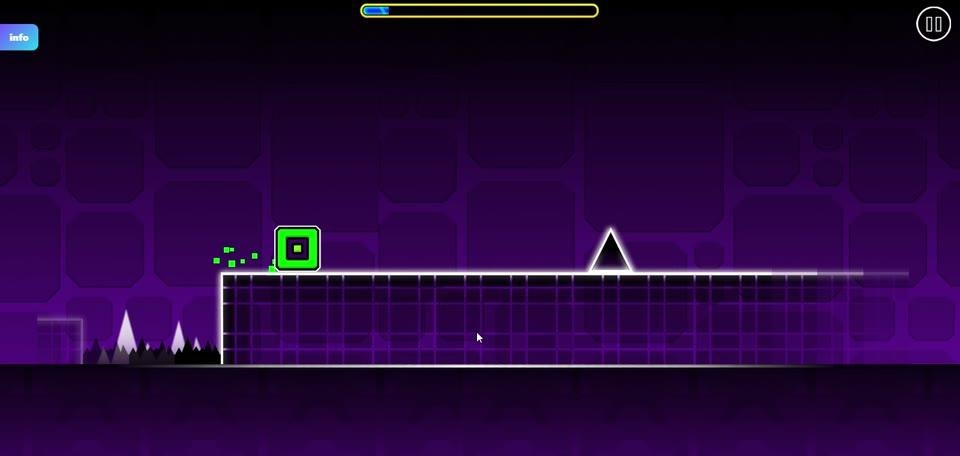
Figure 6. A raised purple platform has a bright upper ledge and a triangular spike on its top.
Ship Portal and Flight
When the player passes through a Ship Portal, the cube transforms into a pointed green ship. This changes the task from landing jumps to managing height: holding the flight control makes the ship climb, and releasing it lets gravity pull the ship downward. Small corrections help you stay inside the open corridor.
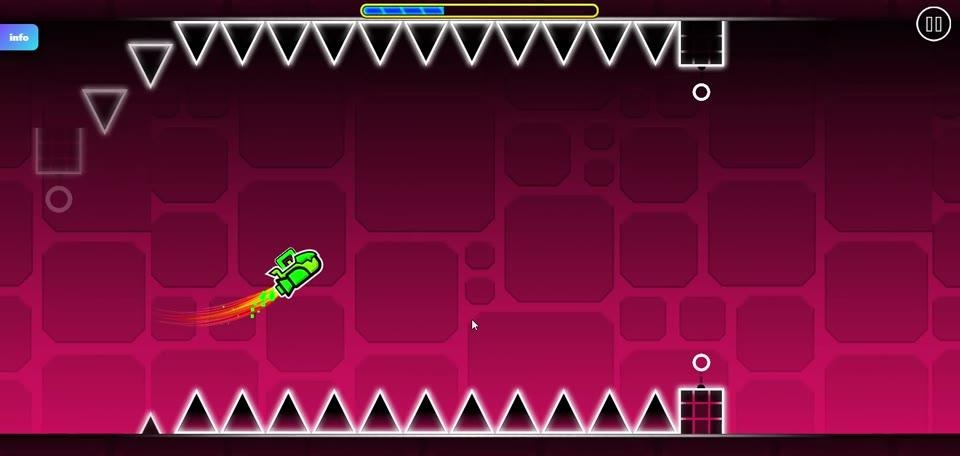
Figure 7. The green ship flies through a red passage between spikes on the ceiling and floor.
In the red-tinted flying sections, upward spikes line the floor and downward spikes hang from the ceiling. Dark rectangular columns also descend into the path; touching one destroys the ship and ends the attempt. Watch both boundaries, because climbing away from the floor can bring the ship dangerously close to the ceiling.
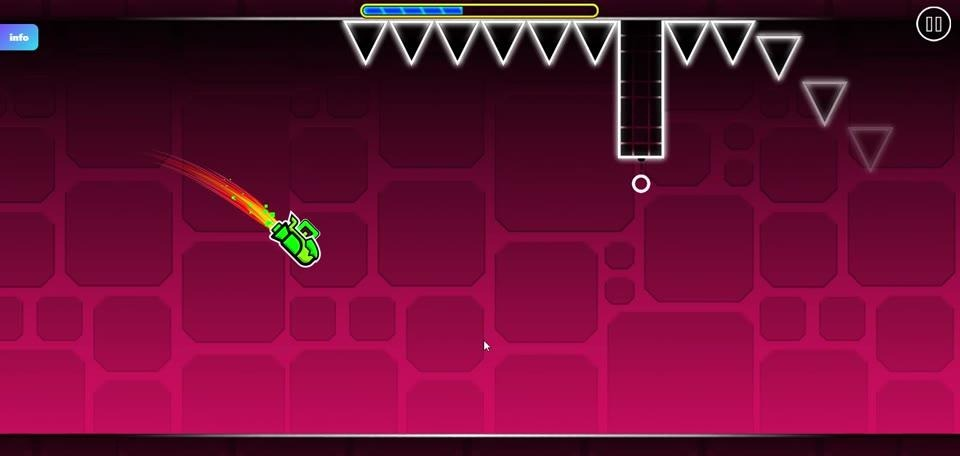
Figure 8. Overhead spikes and hanging columns narrow the green ship’s path through a crimson corridor.
Progress, Completion, and Retries
Levels form a finite sequence. The slim bar near the top of the screen shows how far you have advanced in the current level; filling it to 100% completes that level and unlocks the next. Completing a level is the win condition, while every safe stretch along the way is progress toward it.
Hitting a deadly spike or column immediately ends the current attempt. A retry starts the same level from its beginning, so the route must be cleared again. You can keep retrying without a fixed attempt limit, although watching an advertisement can be required between attempts.
The game also recognizes your farthest progress. A failed run can produce a bright burst beside the obstacle and a celebratory NEW BEST! message; one example reads 52%. That best-progress percentage is saved across retries and later visits, giving you a concrete distance to beat on your next attempt.
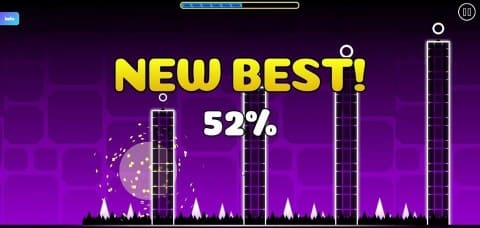
Figure 9. A bright collision burst appears beside spikes as the screen announces a new best of 52%.
On-Screen Information
The narrow blue-filled progress indicator sits near the top center. At the upper right, a small circle with two vertical bars opens the pause menu, where you can resume play. The blue Info label at the upper left opens our game menu. These controls sit outside the route, leaving the cube, ledges, and hazards easy to spot.
Visual Style
Our stages pair dark tracks with bright, clean outlines. Blue and violet backgrounds frame many cube sections, while red and magenta tones make the flying corridors feel tighter and hotter. White borders distinguish triangular hazards, rectangular columns, and safe ledge tops at a glance, keeping the cube easy to follow against the darker scenery.
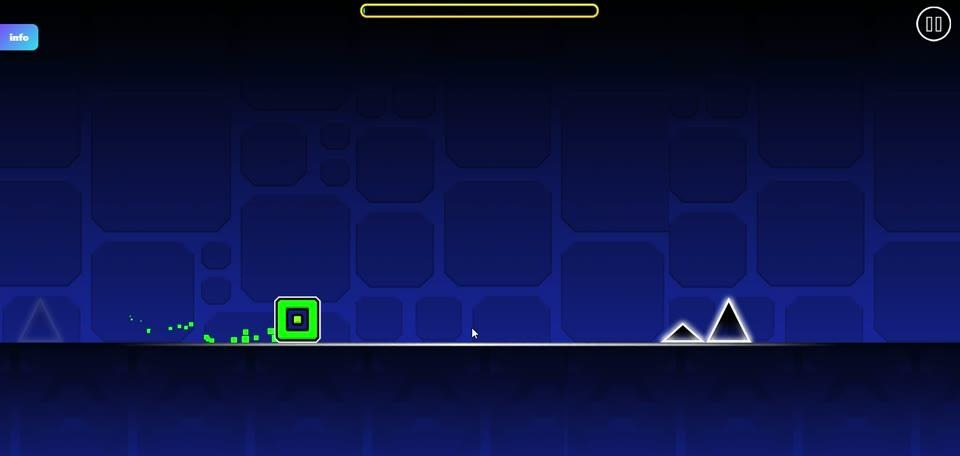
Figure 10. White-edged spikes stand out against a purple stage as the green cube crosses the track.
The cube leaves a scattering of small green light particles behind it. In ship form, that trail becomes a short orange-red exhaust streak, making the craft’s position and angle readable against the crimson passage. The look is lively, but its practical advantage is simple: you can spot the next edge before it arrives.
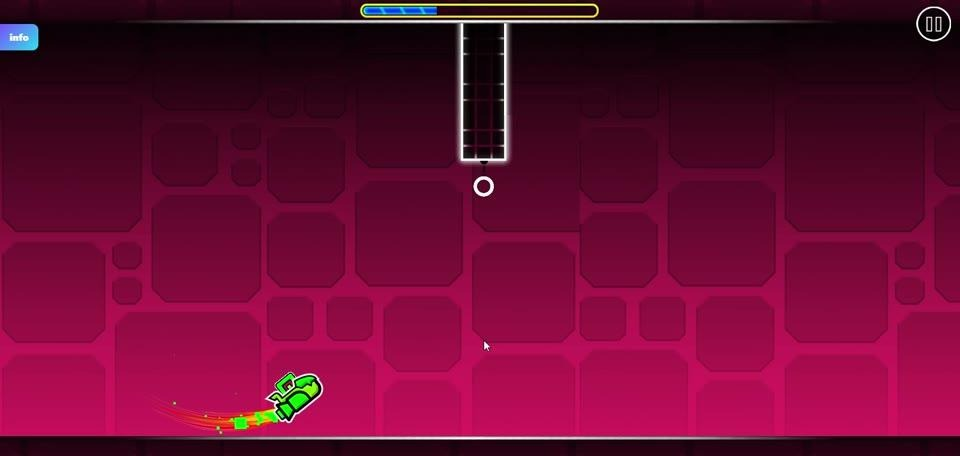
Figure 11. A green ship leaves a warm orange-red streak beneath white-edged hazards in the red section.
Standout Features
Our cube and ship sections test two different kinds of timing. As the cube, you jump over spikes and clear columns, then land on safe ledges or column tops. When you pass through a Ship Portal, you become a ship: holding the flight control makes you climb, while releasing it lets you descend between hazards above and below. Where a Ship Portal appears, this change in movement adds a different challenge without requiring a long list of controls.
The Impossible Game is a one-button platformer in which you guide a cube over spikes and pits. [7] In Geometry Dash Lite, you time cube jumps over hazards, and passing through a Ship Portal changes the task to controlling a ship's height. BIT.TRIP RUNNER is an arcade-style rhythm game. [8] Our challenges here include solid ledges for careful landings, narrow flying corridors, and a progress percentage that tracks how far you've gone.
The saved personal-best percentage makes a near miss meaningful even when the level is unfinished. Reach a new distance, learn where your timing slipped, and try that stretch again. Play Geometry Dash Lite on Wavechallenge and see whether your next move can carry you all the way to the end.
Controls
PC
1. While the cube is moving through a level, press the left mouse button, Space, or the Up Arrow to jump.
2. Use another timed jump when the next spike, gap, or raised landing approaches; clear the hazard and aim to come down on a solid surface.
3. After passing through a Ship Portal, hold the left mouse button or Space to make the ship rise. Release to let it descend.
Mobile
1. Tap the game screen to make the moving cube jump over the next hazard.
2. In ship mode, touch and hold the screen to climb. Lift your finger to descend.
If you want to explore new versions of Geometry Dash with different forms of the geometry, let's fly up an arrow in Geometry Dash Wave Challenge.
References
[1] Chronophotography. https://en.wikipedia.org/wiki/Chronophotography
[2] Eadweard Muybridge. https://en.wikipedia.org/wiki/Eadweard_Muybridge
[3] Étienne-Jules Marey. https://en.wikipedia.org/wiki/%C3%89tienne-Jules_Marey
[4] Chronophotographic gun. https://en.wikipedia.org/wiki/Chronophotographic_gun
[5] Chronophotography as a Method of Recording Movement in the Intellectual Field of Science and Choreography in the End of 19th Century. https://doi.org/10.21638/spbu15.2026.208
[6] Exposed to time: cross-histories of human motion visualization from chrono- to dynamophotography. https://openalex.org/W2612656805
[7] The Impossible Game. https://en.wikipedia.org/wiki/The_Impossible_Game
[8] Bit.Trip Runner. https://en.wikipedia.org/wiki/Bit.Trip_Runner
Image Credits
Marey- Man walking, 1890–91.jpg — Étienne-Jules Marey — publicdomain. https://commons.wikimedia.org/wiki/File:Marey-_Man_walking,_1890%E2%80%9391.jpg
Étienne-Jules Marey in Naples.jpg — Unknown author Unknown author — publicdomain. https://commons.wikimedia.org/wiki/File:%C3%89tienne-Jules_Marey_in_Naples.jpg