Drift F1
 Subway Surfers
 Ball Surfer 3D
 Run 3
 Swagflip
 Victory Lap Dash
 I Just Might Dash
 Dinosaur Game 3D
 Super Mario 64
 Bottle Flip 3D
 Roller Baller
 Spongebob Jump
 Goober Dash
Concept and Inspiration
From a mountain overlook, a forested valley can seem calm and continuous. Down among the trees, though, the next turn may be hidden until a driver is almost upon it. Real-world rallying often sends competitors along point-to-point routes rather than around the same circuit, with events testing speed, navigation, or both. Knowing where the road goes can matter as much as seeing where it is right now. [1]
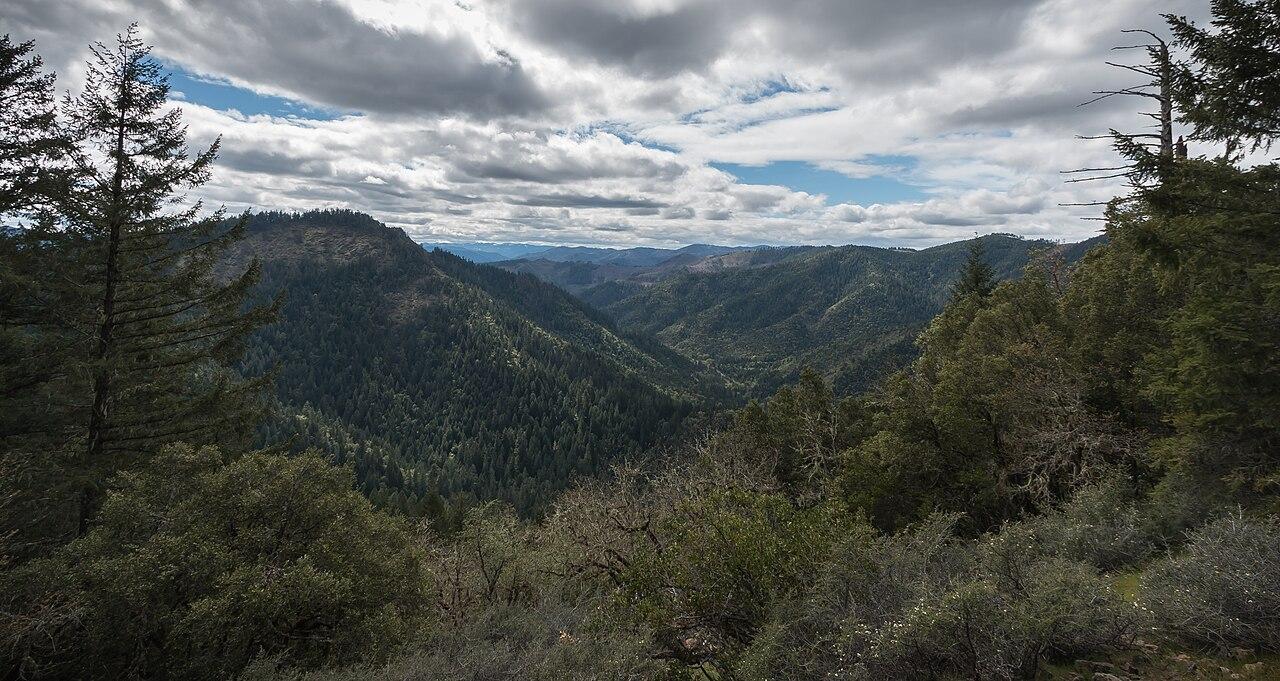
Figure 1. A wide view of forested mountains and valleys, illustrating how much terrain lies beyond a driver's immediate view.
Photo: BLM Oregon & Washington | publicdomain
That is why rally drivers often have a co-driver beside them. The co-driver reads directions and warnings aloud, helping the driver prepare for corners that are still out of sight. Those instructions, called pacenotes, can describe the severity of a bend, the distance to the next feature, a crest, or a change in road surface. They compress a complicated route into information a driver can use before reaching the turn. [2][3]
A roadbook offers another way to read unfamiliar ground: diagrams, coordinates, and written directions help travelers follow a route. Look at a pale gravel road threading through a steep, wooded valley. Its visible curves are only part of the journey; beyond each patch of trees, another bend may be waiting. A small route diagram turns that uncertainty into something you can prepare for. [4]
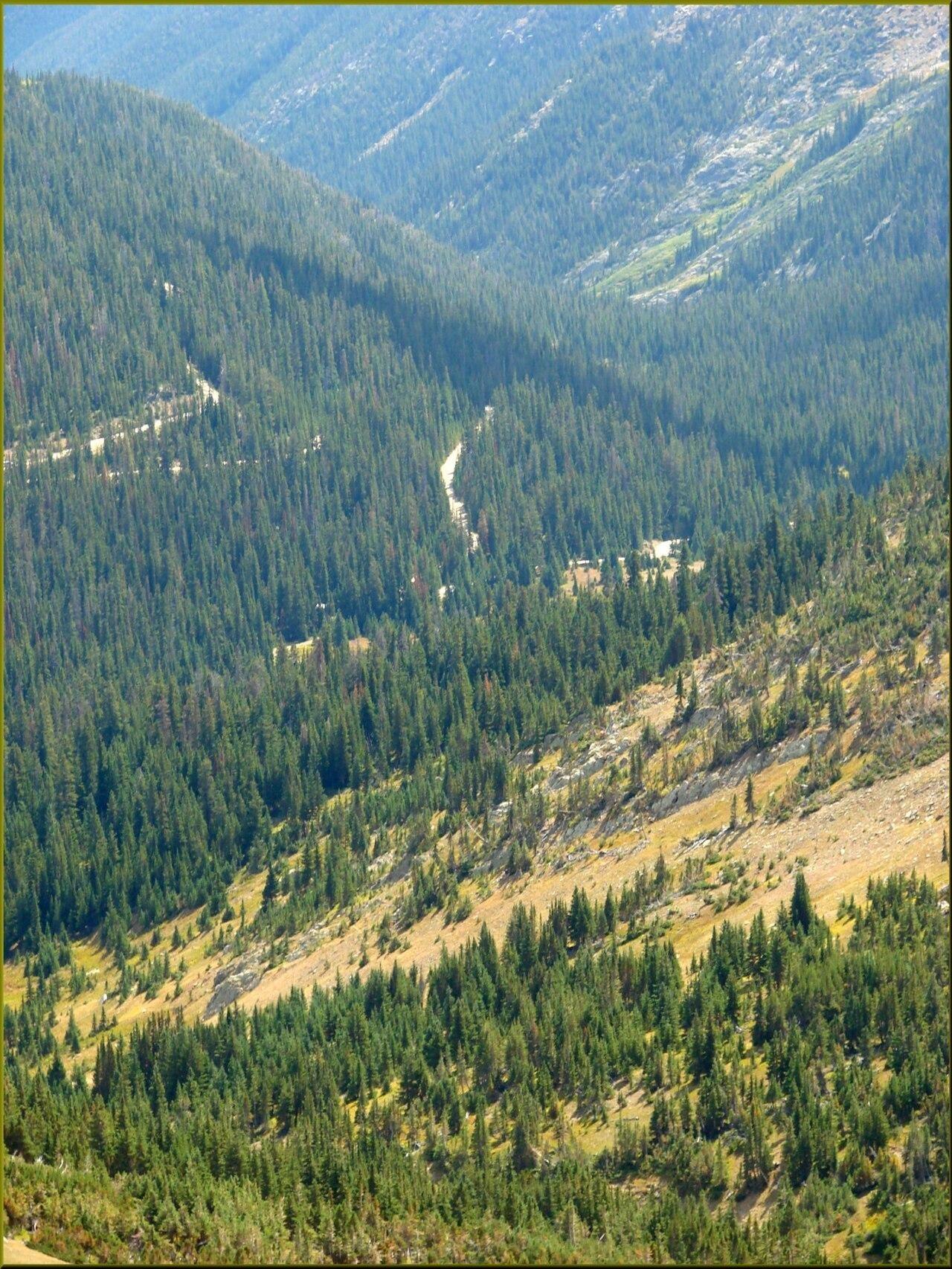
Figure 2. A narrow, pale gravel road curves through dense mountain forest below an alpine viewpoint.
Photo: inkknife_2000 (7.5 million views +) | ccby-sa2.0
Researchers have studied that same habit of looking ahead. In a 2021 steering experiment, participants' gaze patterns changed with the position of missing route markers, indicating that they were anticipating the path ahead. Another study found that drivers could use intermittent views of a curved route to plan steering and update their turns. Research comparing novice and experienced drivers also found differences in how proactively they handled bends. The useful idea is simple: a good turn begins before the corner. [5][6][7]
We developed Drift F1 at wavechallenge.io as our playful take on reading a route one bend early. A little turquoise car moves forward without waiting, while a compact route preview lets you see the shape coming next. Green checkerboard roads twist over bright open space, and pink-striped stretches push the car to higher speed. The two dark tire trails behind your turns look like fresh lines drawn onto the course. You read ahead, make your choice, and discover whether your timing was right.
Story
High above a sea of blue, the last atlas of the sky roads is coming apart. Mara, its aging keeper, watches thin paths fade from page after page. Each time the wind shifts, an old corner disappears from the ink. Soon the towns on opposite sides of the sky will have no way to find one another.
A young courier sets out in a tiny blue car with a single promise: carry the final route home before Mara's map goes blank. There is no room for a slow, careful procession. Green tiles narrow into abrupt corners, and the pink roads rush beneath the wheels like ribbons caught in a storm. At every turn, the courier gets only a glimpse of the next piece of the journey. Behind the car, two curved black lines trace a record of the choices already made.
Mara waits for news at the far end of each route. A checkered finish means another stretch of the atlas can be remembered, another connection kept alive. But a hurried turn can send the little car beyond the road's edge, forcing the courier to begin that passage again. The final journey is not about outrunning another driver. It is about learning to trust a fleeting look ahead, one corner at a time, until the last road has been crossed.
Gameplay
Your light-blue car drives forward automatically along the narrow road. Hold the steering input to drift around a bend; release it to switch steering direction, then hold again to take the next bend. Collect the gold coins along the track as you head toward the checkered finish. Crossing the finish completes the level; falling off either edge ends the attempt immediately. Watch the road ahead so you can switch direction in time for the next corner.
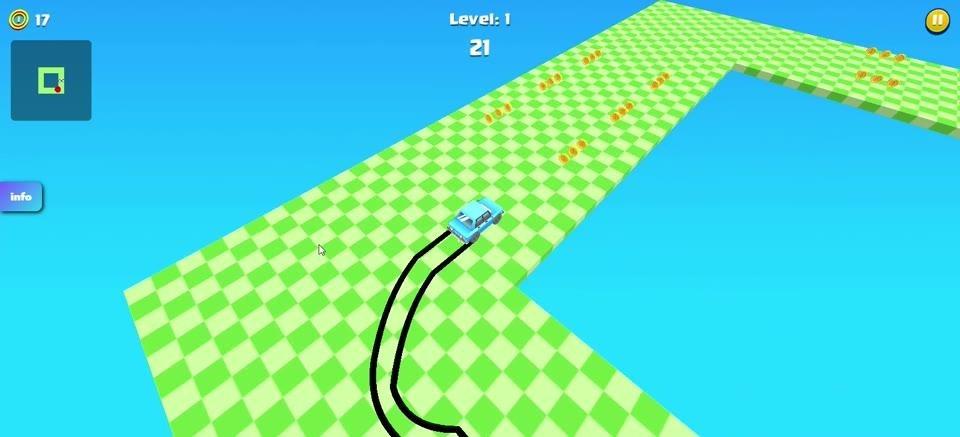
Figure 3. The blue car follows a green checkerboard road toward a sharp turn, with gold coins along the route.
The Car, Corners, and Faster Road Sections
You begin with a compact turquoise car with a light roof and dark windows. Green-and-white checkerboard roads carry it across straight stretches, zigzags, and sudden angled turns. Beyond either edge is open cyan space, so staying centered matters. Two curved black tire trails follow the turns and make each drift easy to spot.
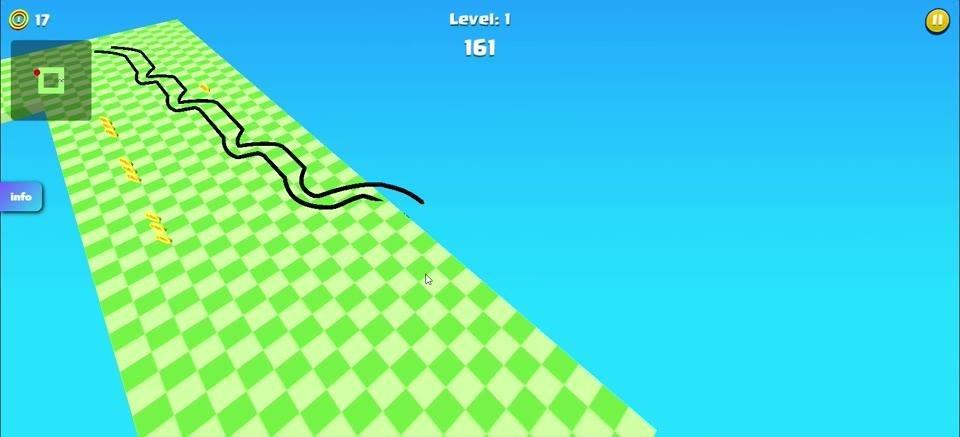
Figure 4. A winding green checkerboard course shows sharp bends, black tire trails, and the route preview at the upper left.
Pink-and-pale striped sections increase your speed. That makes the next corner arrive sooner, especially when a striped stretch meets a tight turn. For example, after clearing a green bend, look toward the next angled section and adjust your drift before the faster pink road carries the car across it. You are still steering the same automatically moving car, but you have less time to correct a late decision.
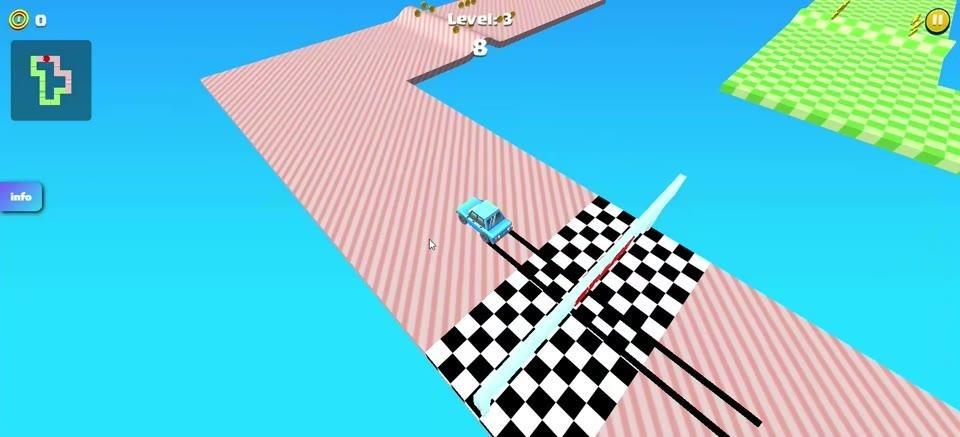
Figure 5. A pink-striped stretch meets a checkered finish line on an exposed, angular course.
Coins, Unlockable Cars, and Route Information
Gold coins appear as small yellow discs along the road. Drive through them to collect them: each coin picked up adds one coin to your total. The large white number beneath the level label counts coins collected in that level, while the coin symbol at the upper left shows the current run's coin count. These coin displays are different from the finish score, which rewards a fast completion time.
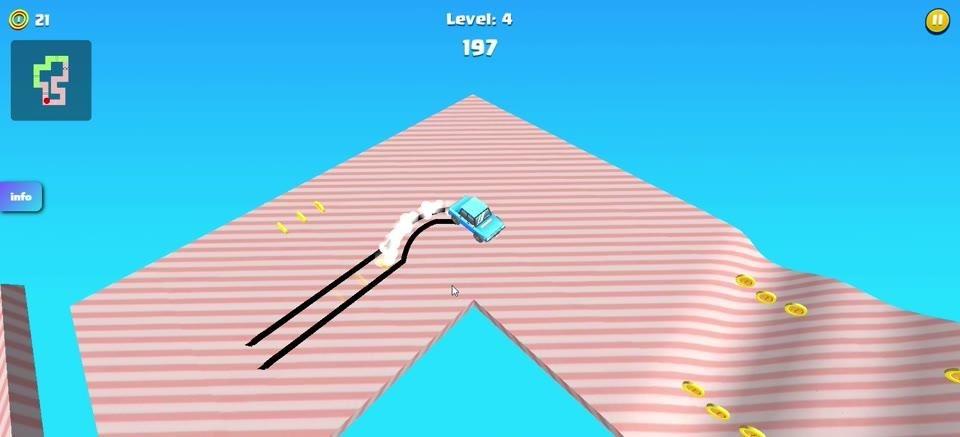
Figure 6. Gold coins are spaced along a narrow course as the car approaches another turn.
Coins also give you a reason to revisit the road. The default sedan is ready to drive, and accumulated coins can unlock other vehicles in the car selection or garage. The police car costs 300 coins, the green SUV 350, the ice cream van 400, the ambulance 450, and the fire truck 500. Pick the vehicle you want, gather enough coins, and purchase it from the car selection screen.
The level number sits near the top center of the screen. A small square at the upper left shows a preview of the route's shape, useful for spotting a bend before the car gets there. The round yellow button at the upper right pauses the game. A slim blue Info tab on the left edge opens a game menu.
Finishing, Scoring, and Losing an Attempt
A black-and-white checkered strip, sometimes beneath a FINISH banner, marks the end of a course. Cross it to complete that level. Your finish score is based on completion time: the faster you reach the line, the higher the score. Confetti marks a successful finish, and an online leaderboard can show rankings for Today, Week, Month, and All Time. The Home button on the results screen returns you to the main menu.
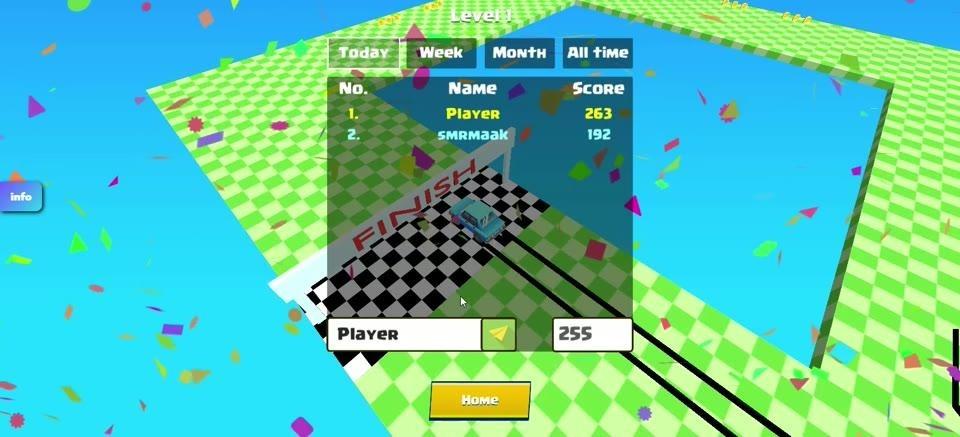
Figure 7. Confetti surrounds the finish area while an online leaderboard displays ranked scores and a Home button.
The goal of each level is to reach its finish, rather than to earn a fixed number of coins. Drift F1 has 35 levels, so there is a final course: after level 35, the game ends and returns to level selection. If your car falls off the road on any level, you lose that attempt immediately. Retrying starts the same level again from the beginning, giving you another chance to take its corners cleanly and finish faster.
Tutorial and Level Selection
The opening tutorial places the blue car on a broad purple-and-pink checkerboard floor and displays the instruction 'Tap and hold to turn.' Small dots below TUTORIAL show how far you have moved through the tutorial steps. A yellow Play button lets you begin driving once the introduction is complete.
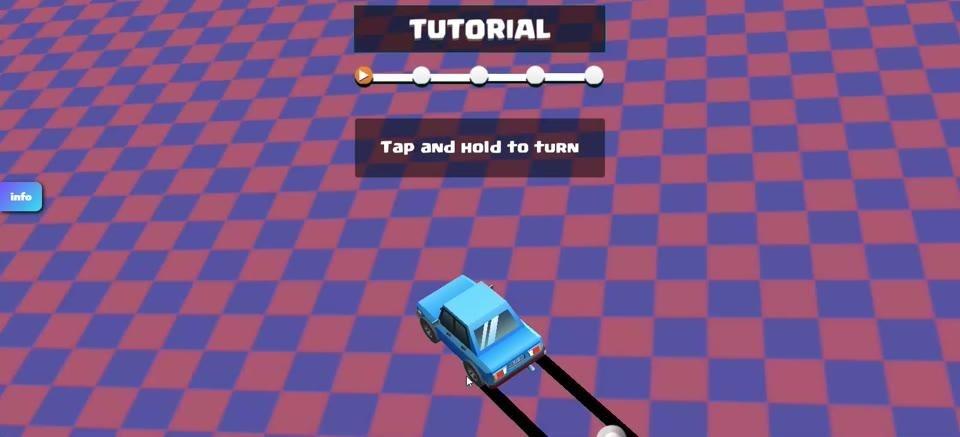
Figure 8. The tutorial introduces the blue car and a hold-to-turn instruction on a purple checkerboard field.
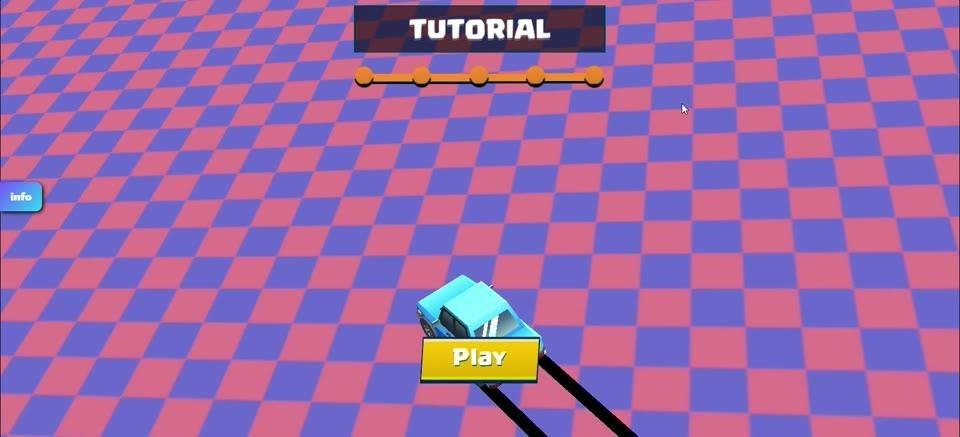
Figure 9. The tutorial presents a yellow Play button beneath its progress markers.
On the title screen, the upper pair of arrows changes the displayed car, while the lower arrows change the selected level. A brown tile gives a small preview of the course layout. The gold play icon starts play, the bar-chart icon opens the leaderboard, and the gear opens volume settings. These menus let you choose a car and course before taking on the next run.
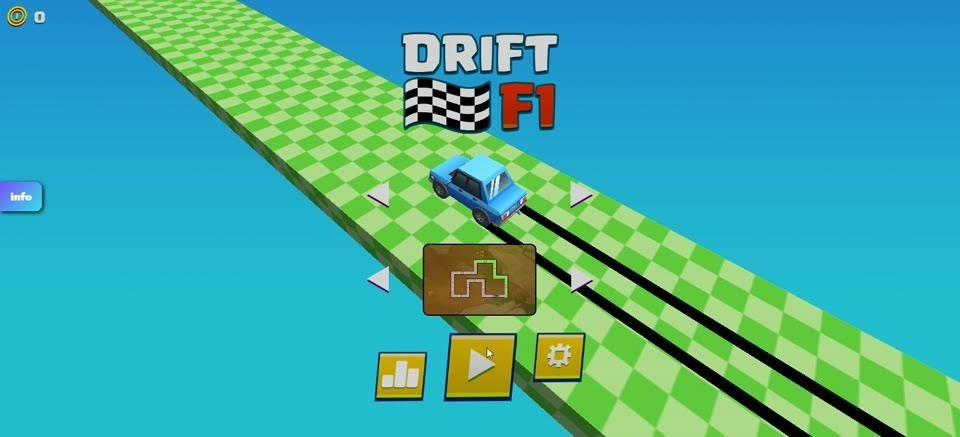
Figure 10. The Drift F1 title menu shows the selected car, a small course preview, selection arrows, and gold menu buttons.
Visual Style
Drift F1 keeps the driving view bright and readable. The small car is seen from above at an angle, with a pale roof that stands out against green-and-white tiles. The surrounding cyan space gives every narrow edge a clear outline, while the sharp road corners remain visible far enough ahead to plan the next drift. Two dark, curling tire lines add a lively sense of movement without covering the track.
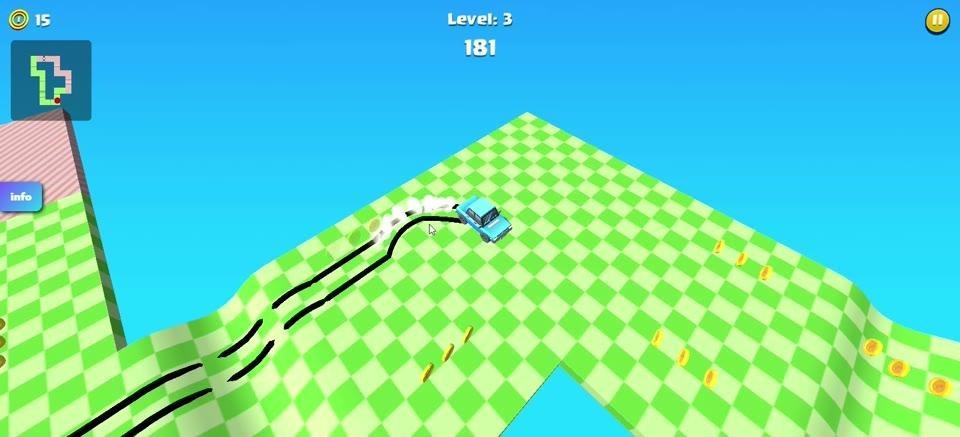
Figure 11. The angled driving view emphasizes the small blue car, sharply turning road, and dark curved tire lines.
The courses switch between playful green checks and closely packed pink stripes, so the faster sections have a clear visual identity. Gold coins draw a dotted path across some stretches. At the end, a bold checkered stripe and colorful confetti make the arrival easy to recognize. The large level and coin numbers, small route preview, and compact buttons keep the important information near the edge of the action.
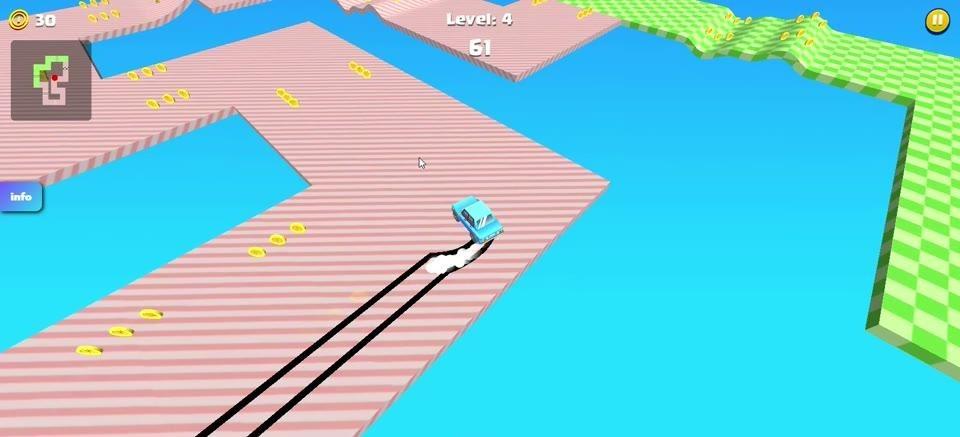
Figure 12. Pink-striped and green checkerboard roads frame the car, coins, and an angular route.
Standout Features
The most satisfying challenge is how little you need to control and how much timing matters. The car handles forward motion, leaving you to concentrate on the next turn. A route preview gives a small warning of what is coming, and the paired tire trails show the path you just carved. On a narrow course, one well-timed drift can feel like threading a needle.
Pink speed-up roads add a distinct twist to the corner rhythm, while coin trails create a second decision: follow the pickups when you can, but keep the car on the road. Coins help unlock different vehicles; reaching the finish quickly produces the higher time-based score. The online leaderboard and 35-course progression give both individual runs and the complete set of levels a clear purpose.
Whether you are chasing a cleaner turn, gathering coins for another car, or aiming to finish a level sooner, there is another route to read. Take your first bend in Drift F1 on wavechallenge.io and see how far your timing carries you.
Controls
On PC
1. Click the yellow Play button to begin; the blue car starts moving forward by itself.
2. Press and hold the left mouse button or Space as a bend approaches to control the car's drift.
3. Release the button or Space at the right moment to change steering for the next stretch. Repeat the hold-and-release timing at each turn to keep the car on the road.
On Mobile
1. Tap the yellow Play button to begin; the blue car advances automatically.
2. Touch and hold the screen as the car reaches a corner to control its drift.
3. Lift your finger to change steering for the next section. Touch, hold, and release again as the road bends to guide the car toward the finish.
References
[1] Rallying. https://en.wikipedia.org/wiki/Rallying
[2] Co-driver. https://en.wikipedia.org/wiki/Co-driver
[3] Pacenotes. https://en.wikipedia.org/wiki/Pacenotes
[4] Roadbook. https://en.wikipedia.org/wiki/Roadbook
[5] Visual anticipation of the future path: Predictive gaze and steering. https://doi.org/10.1167/jov.21.8.25
[6] Visual control of steering in curve driving. https://doi.org/10.1167/19.5.1
[7] Perception and Anticipation in Negotiating Curves: The Role of Driving Experience. https://openalex.org/W1573357175
Image Credits
London Peak (34502088996).jpg — BLM Oregon & Washington — publicdomain. https://commons.wikimedia.org/wiki/File:London_Peak_(34502088996).jpg
Rocky Mount N.P., Alpine Visitor Center 8-28-12 (8083932271).jpg — inkknife_2000 (7.5 million views +) — ccby-sa2.0. https://commons.wikimedia.org/wiki/File:Rocky_Mount_N.P.,_Alpine_Visitor_Center_8-28-12_(8083932271).jpg License: https://creativecommons.org/licenses/by-sa/2.0